A Two-Minute Film Choice for a Busy Weeknight
A two-minute film choice matches a movie to your time, attention, and company, helping you settle on a fitting option before the evening slips away.

The common mistake in a weeknight film choice is opening a streaming app before deciding what the evening can hold. A long scroll can spend the time you meant to give a movie and still leave everyone undecided. A two-minute film choice begins with the evening, not the catalog.
Set the evening’s limits before browsing
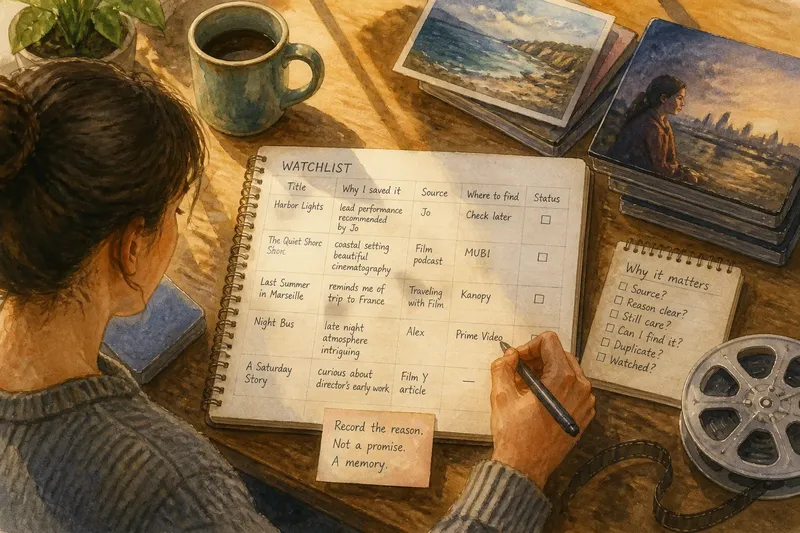
Imagine Lena gets home expecting to watch a film with her partner. They have eaten, but one of them needs an early start, and neither wants a demanding story after a tiring day. Their shared watchlist is long, so opening it without a filter could turn a simple choice into a tour of every saved title.
They agree to make the choice in two minutes, not to complete every part of the evening routine in that time. The routine is a brief conversation that narrows the field; checking a listing or settling in can take longer. The point is to reach a plausible choice promptly, not to race through the film’s details.
Start with the latest acceptable finish, then allow time to settle in and watch the credits or reach a natural stopping point. Runtime alone can mislead: a movie that fits only if everyone rushes is not a good match for a relaxed evening.
Let attention narrow the film choice
Next, Lena and her partner describe their attention plainly. They are willing to follow one main storyline, but not to track a dense plot while checking tomorrow’s calendar. That rules out some appealing choices without making a judgment about their quality.
Attention changes from evening to evening. After a demanding day, a familiar comedy or a clear, self-contained story may feel easier to follow than a film with many characters and shifting timelines. On a quieter night, those same viewers may welcome a more intricate film. The useful question is not whether a movie is “easy,” but what kind of attention it asks for.
Think of time and attention like choosing a coat before leaving home: the weather sets a boundary, but it does not choose the color for you. These limits narrow the field; taste still makes the final call.
Include everyone who will watch
Company changes the shortlist. Lena wants a warm tone, while her partner is open to suspense but wants to avoid graphic violence. Those preferences guide the choice more clearly than broad genre labels.
With a group, ask each person for one appealing quality and one boundary. Someone might want a strong visual world but avoid a bleak story. If the group cannot find overlap, pick one person’s suggestion this time and keep another’s for a future evening.
For Lena and her partner, the answers point toward a compact, gently funny film they already know is available. They confirm the runtime and check the content information before choosing it. Platform listings, distributor descriptions, and local availability can change, so verify those details where they matter to the decision.
Use a brief routine to reach a shortlist
Before opening an app, Lena and her partner take these actions. Each result tells them what to do next:
- Name the stopping point. Check when the evening must end; if that time is firm, choose a film that can finish comfortably before it, and if it is flexible, agree on the latest acceptable finish before browsing.
- Set a runtime ceiling. Check how much time remains after settling in; if the film fits with room to spare, keep it in consideration, and if it would require a rushed finish, remove it or agree that pausing is acceptable.
- Describe tonight’s attention. Check whether viewers want a simple thread, a layered story, or something familiar; if they agree, use that as a search filter, and if they differ, favor a self-contained option or take turns choosing.
- Ask who is watching. Check that each person can name one preference and one boundary; if a title respects both, keep it on the shortlist, and if it crosses a boundary, set it aside.
- Choose a search lane. Check which tone, genre, or story quality fits the answers; if one lane fits, search within it, and if none does, revise one preference together instead of browsing every category.
- Stop at a small shortlist. Check a few plausible titles against the agreed limits; if one fits, choose it, and if none fits, change one constraint openly or choose a different kind of evening.
Say Lena and her partner have a firm early bedtime, want an uncomplicated story, and need to avoid graphic violence. They first set a latest finish that leaves time to settle in, then search their saved titles for light, self-contained films. One saved comedy appears to fit; they check its current runtime and content description, confirm that it meets their finish time and boundary, and select it. If the listing instead showed that it ran too late, they would return to the shortlist and choose another title. The result is a clear decision based on their actual evening, not a claim that the first film is best.
How does a two-minute film choice handle common snags?
What if the available time is unclear?
Set a latest acceptable finish and choose a film that leaves room for the evening to run a little long. If interruptions seem likely, agree that pausing is acceptable rather than treating the schedule as certain.
How can two people with different tastes choose?
Ask each person for one positive preference and one boundary, then look for a film that respects both. If no title fits, take turns choosing on different evenings rather than debating which genre is better.
Should a familiar film count as a good choice?
Yes, if familiarity suits the evening. A known film can be a deliberate choice when attention is low or the pleasure lies in revisiting performances, images, or a particular scene.
What if none of the shortlisted films feels right?
Return to one constraint and change it openly: the group may have more time than expected, or everyone may feel more alert. If the shortlist still fails, choose a different kind of evening instead of letting the app decide by default.
Let the choice serve the evening
A two-minute film choice is a small act of coordination, not a rule for selecting worthy cinema. Practical limits can sit alongside curiosity: a film outside the usual genre may still fit if its length, tone, and demands suit the people watching.
When Lena and her partner finish, they know why the choice works for tonight: a clear stopping point, modest expectations for attention, and a shared preference. The next time the queue feels endless, they can begin with those same questions. If the evening changes after they press play, they can pause and make a new choice without treating the first one as a failure.