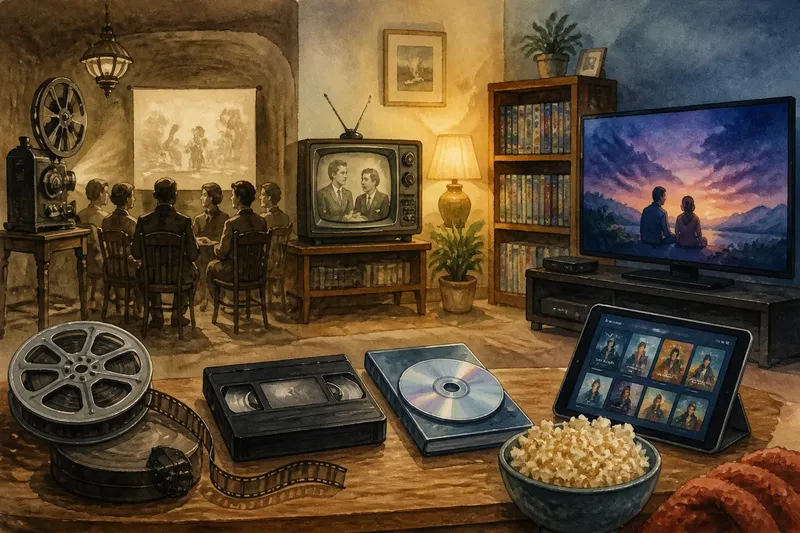
Subtitles on a Commute, or Sound at Home? Matching a Film to the Moment
Choose subtitles on a commute or sound at home by matching a film’s dialogue, visuals, and pacing to the attention your viewing moment allows.
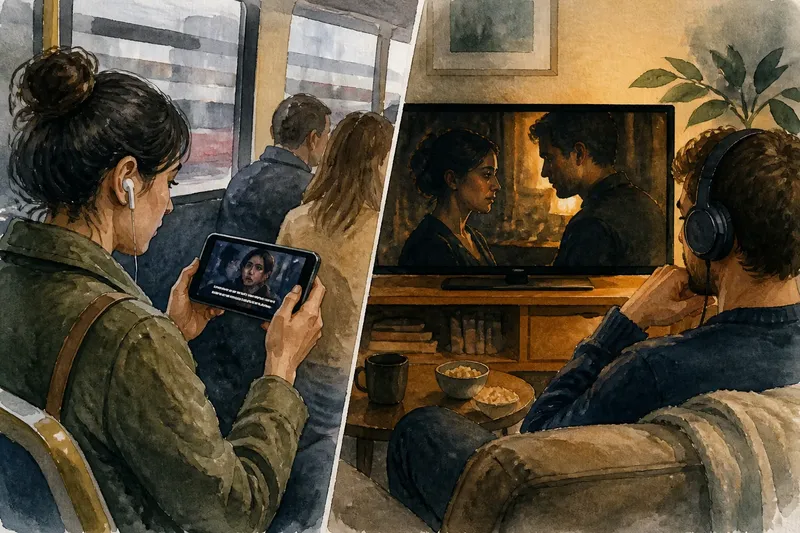
The common mistake is choosing a film by its length, then asking a noisy commute or a tired evening to accommodate it. That can cost more than a few missed lines: a film built around pauses, glances, or a quiet shift in tone may become a string of disconnected scenes. Subtitles on a commute can work when the image and text remain easy to follow; sound at home is the better choice when a voice or a small acoustic change carries the scene.
Match the film’s demands to the room
A dialogue-led film is not simply one with many conversations. The useful question is what the dialogue is doing. If a scene’s meaning rests on a change of subject, a hesitation, or a line delivered under someone else’s breath, missing a few words may alter the whole exchange.
Some films give the eye more to hold. A character’s position in a doorway, a recurring object, or a change in the light may tell you how a scene has shifted even when a line slips past. That does not make the soundtrack disposable; it means the image provides another route into the moment.
Think of attention like a desk. A broad surface can hold several ordinary tasks without much trouble, but a delicate object needs room of its own. A film with layered dialogue is that delicate object: it is easier to follow when the setting does not keep asking for your attention.
Subtitles help only when the screen can hold your gaze
Text can recover dialogue that a bus engine or a train announcement would otherwise bury. It cannot recover a scene you did not see. Reading subtitles requires repeated glances at the screen, so movement, glare, small text, and nearby activity can make a supposedly accessible viewing window more demanding than it looks.
Consider what happens when the film puts two kinds of information in different places. A subtitle may sit at the bottom while an important expression appears across the frame. If the film often asks you to read and watch at once, a cramped screen or frequent interruption can make you choose which part to lose.
Subtitles are more promising when the image stays visually legible and the dialogue is plainly rendered. They are less helpful when the screen is hard to see, when the words arrive too quickly for your comfortable reading pace, or when the scene depends on noticing a quiet visual change during a line.
- Check whether you can see the whole screen without holding your device in an awkward position; if you can, subtitles remain practical, but if you cannot, save the film for a larger or steadier screen.
- Notice whether surrounding light makes the text difficult to read; if the words stay clear, continue, but if glare obscures them, change your seat or wait for a better-lit setting.
- Consider whether the film often places important visual detail beside a line of dialogue; if it does, choose a quiet viewing setting, but if the images and dialogue are easy to follow separately, a commute may work.
- Check whether interruptions are likely to happen at places where you can pause; if they are, watch a short stretch and stop at a scene break, but if they are unpredictable, save the film for a calmer interval.
- Notice whether text appears at a pace you can comfortably read; if it does, subtitles can help with missed sound, but if it does not, choose a setting where you can hear the dialogue.
- Check whether you can keep your attention on the screen without neglecting your surroundings; if you can, continue only during safe, settled moments, but if you cannot, stop watching and attend to the journey.
These are viewing judgments, not rules about a particular device or release. Subtitle controls, display behavior, and accessibility options vary, so consult the relevant device or distributor guidance when a setting is unclear.
Sound at home makes quiet details available
A quiet room gives dialogue room to breathe, but the advantage is not limited to hearing every word. A chair creak, a held breath, or the faint sound of a door can change how a pause feels. When the film uses those details deliberately, listening is part of watching rather than a background convenience.
Home sound does not have to mean turning the volume up. A moderate level in a calm room may make speech easier to follow than louder playback in a space that keeps interrupting it. If others share the room, headphones can reduce disturbance, though they cannot remove the competing demands of a conversation or a household task.
Also notice the kind of dialogue. A measured exchange with clear pauses may remain intelligible at a restrained volume. Overlapping voices, soft speech, or a low voice against music can ask for a quieter setting, especially if the film’s emotional turns depend on precise delivery.
Choose the room for the sound the film actually uses. If the soundtrack is mostly clear speech and the images carry much of the scene, modest background noise may be tolerable. If silence itself feels charged, protect that silence by saving the film for a less interrupted stretch.
Interrupted viewing changes the shape of a scene
A short window is not automatically a poor one. The trouble begins when the film’s organization makes stopping costly. A sequence may build through a chain of small reactions, so returning after a notification or a platform change can leave you uncertain about why a character’s expression matters.
Look for natural seams rather than relying on the clock. A scene change, a clear transition in place, or a pause after a completed exchange can offer a more comfortable point to stop than the middle of a confrontation. If you need to pause often, remembering the last completed action may help you re-enter without replaying the whole stretch.
But a commute adds constraints that a living room does not. Stops, announcements, other passengers, and the need to stay aware of your surroundings can make careful viewing impractical. Keep your attention on safe travel and local transit instructions; a film should never compete with tasks that require awareness.
Say you have a short train ride and are considering a film whose scenes use clear visual transitions, with dialogue that usually repeats or clarifies what the image already suggests. You could watch a brief stretch with subtitles, pause at a scene break, and resume later; the likely benefit is a coherent portion of the film rather than a rushed attempt to finish it. If the same ride is noisy and the film hinges on whispers and subtext, saving it for a quiet room is the more considerate choice.
Subtitles on a commute or sound at home?
Use a direct rule: choose subtitles on a commute when the screen is visible, the film’s important information remains legible through images and text, and the journey allows safe attention. Choose sound at home when quiet speech, overlapping dialogue, or subtle changes in the soundtrack carry meaning. If neither setting meets the film’s demands, wait for a better moment rather than forcing the choice.
Can a dialogue-heavy film work on a commute?
It can if the screen remains easy to read, the journey allows safe attention, and interruptions fall at manageable points. If the film relies on overlapping voices, subtle delivery, or expressions you must watch while reading, a quiet room is likely to serve it better.
Are subtitles enough to overcome background noise?
They can preserve spoken words when you miss some of the sound, but they do not restore a glance, a gesture, or a moment you missed while looking away. They also demand steady screen access, so noise and visual distraction should be considered separately.
Should I use headphones for a film at home?
Headphones can make speech easier to hear without filling a shared room with sound. They do not solve fatigue or divided attention, and a quiet setting may matter more than changing the playback equipment.
When is a short viewing window a bad fit?
It is a poor fit when you expect repeated interruptions and the film’s scenes depend on accumulating small clues or emotional shifts. A clear pause point can make a short session work, but it cannot make every kind of scene easy to resume.
Let the film’s attention pattern make the decision
Before pressing play, listen for what the film asks you to notice. Does a scene reveal itself through carefully chosen words, through faces and framing, or through the relation between sound and image? A brief preview or the opening scene may offer clues, but there is no need to turn that glance into a verdict on the whole film.
Then weigh those demands against the setting you actually have. A commute may offer a bright screen and a few uninterrupted stops, or it may bring glare, announcements, and constant movement. Home may be quiet but still divided by chores or conversation. The useful choice is the one that respects those conditions rather than imagining an ideal version of them.
Say you are deciding between subtitles on a commute and sound at home. The film opens with a conversation in which a quiet pause and a change in a character’s expression matter as much as the words. If your commute has glare and frequent announcements, those inputs point away from subtitles: you would have to divide your gaze and might miss the expression. At home, with the same scene available in a calm room, the expected tradeoff is straightforward: you give up the chance to watch during the ride but can attend to both voice and face. If instead the opening scene makes its meaning clear through visible actions and short, plainly rendered lines, a safe, steady commute may be a reasonable option.
That small distinction can preserve the pleasure of watching without turning a film into another task to complete. Some scenes deserve a quiet room and full attention; others can accompany a modest stretch of the day. Matching subtitles on a commute or sound at home to what the film makes hardest to recover is more useful than choosing by duration alone.